





November 8, 1939, could have changed the world—but it didn’t. At 9:20pm, a bomb went off in Germany with Adolf Hitler as the target, but due to a last-minute change in schedule, he left 13 minutes before the explosion. The bomb, planted by Georg Elser, would have ended the bulk of World War II before it even started.
History turned on 13 minutes.
But while history is full of “what ifs,” it’s also full of “what was”—moments that did happen and that did change the world.
Acts 2 is one of those moments, a sovereignly ordained explosion of grace and truth. The birth of the church. The outpouring of the Holy Spirit. And the sermon that changed the world.
Peter Preached
In Acts 2:14, Peter—the same Peter who once denied Jesus to a servant girl—now stands publicly and boldly, raising his voice above the crowd to preach. Not chat. Not give a TED Talk. Not sit on a stool with a latte and ask questions. Not stand up there with his wife and have a dialogue. He preaches.
Three indicators in Acts 2:14 show us this is preaching:
- Peter stands with the eleven – He’s not acting on his own. He stands with apostolic authority, as a representative of Christ’s commissioned witnesses.
- He lifts his voice and addresses them – This is authoritative proclamation. A Spirit-empowered, clear, challenging monologue in the midst of confusion and mockery.
- “Let this be known to you” and “give ear to my words” – Peter commands attention. His message is weighty. Eternity is in the balance. He is taking authority over the assembly.
This is not a moment for quips and tweets. This is not about sports’ stats, movie reviews, or anecdotes. This is preaching with eternal urgency.
The Priority of Preaching
The miracle of tongues brought the crowd, but it was the preaching that brought clarity and conversion. In fact, the entire structure of Acts 2 emphasizes preaching. Yes, tongues are miraculous. Yes, the Spirit’s outpouring is supernatural. But what holds the center of gravity? The sermon.
Some churches today will sing for an hour and preach for fifteen minutes. I love rich, doctrinal singing. I love that my own church sings loudly and biblically. But singing should never replace or overshadow preaching.
Preaching calibrates our emotions to the truth. It roots our feelings in facts. It’s not enough to feel deeply—we must feel rightly. And that happens through Spirit-empowered preaching.
The early church didn’t gather around an entertainer. It gathered around the Word.
Healthy churches today are marked by that same priority. Not because preaching is trendy or culturally supported, but because it is God’s design. “Preaching is central to Christianity,” as Sam Waldron rightly notes.
The Purpose of Preaching
Here is a rough outline of Peter’s sermon:
- This is what’s happening (vv.15–21)
- This is how we got here (vv.22–36)
- This is what you must do (vv.37ff)
That’s a solid model for preaching: Exposition, Exaltation, and Exhortation.
1. Exposition
Peter exposits Joel 2:28–32. He brings in Psalm 16 and Psalm 110. He interprets the Old Testament Christocentrically, even without a New Testament in hand.
We must do the same. I don’t care about a preacher’s opinions. Give me the Word. What does it say? What does it mean? How does it apply?
2. Exaltation
The heart of Peter’s message is Christ. Verses 22–24 summarize the gospel: the life, death, and resurrection of Jesus. He doesn’t preach better behavior or seven steps to financial peace. He preaches Christ crucified, risen, and reigning!
As Spurgeon said: “A sermon without Christ! You might as well talk of a loaf of bread without any flour in it. How can it feed the soul?”
And Charles Hodge reminded us: “To make the end of preaching the inculcation of virtue… is attempting to raise fruit without trees.”
We do not preach self-help. We preach the gospel.
3. Exhortation
Peter pleads with his hearers: “Save yourselves from this crooked generation!” (v.40).
Preaching is not merely about filling the mind with information but seeking to apply truth to life. We do not want big brains and cold hearts. We want to see sinners saved and saints edified. It is our hope that the lips of the preacher moves the lives of the people by the power of the Holy Spirit.
The Power of Preaching
What made this sermon so effective? The power came from:
1. The Word of God
J.C. Ryle wrote:“The Word expounded and unfolded… is the safeguard of Christ’s true church.”
Preaching is powerful because Scripture is powerful. It is the breathed-out words of the living God!
2. The Work of the Spirit
A biblical, Christ-exalting sermon means the Holy Spirit is at work. Even if the preacher doesn’t have alliterated points or clever stories, even if he doesn’t know Greek or Hebrew, even if he’s never been to a seminary class at all, the Spirit applies the Word with precision.
Christian preaching is powerful because God the Holy Spirit is at work in it.
3. The Way of Peter
That is, Peter was bold. This is The Fisherman’s Fire.
Barely over fifty days earlier, Peter denied Christ. Now he preaches Him with fire. Not because of personality. Not because of theatrics. But because of the power of sovereign grace in his life.
He doesn’t ride a motorcycle onto the stage or any other outlandish gimmick. He simply preaches the truth with fearless clarity. Why? Because pragmatism is powerless.
But boldness? There is power there. Filled with the Spirit, Peter stands before a Jerusalem crowd and declares, “You killed Jesus. But God raised Him up!” (cf. v.23-24, 36).
The Word of God, plainly preached by Spirit-filled men, sets the world on fire.
How Should We Respond?
If this is the sermon that changed the world, how should we relate to preaching today?
Discern It
Not all “sermons” are biblical. Many are shallow, self-centered, or void of Christ. Test what you hear. Hold it to the Acts 2 model.
Appreciate It
Faithful preaching is a gift of grace. Praise God for it. Be thankful for men who preach this way.
Hunger for It
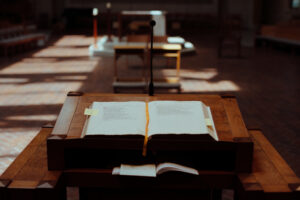
Prepare your heart. Even on Saturday night. Pray for your pastors. Remove distractions. Teach your children to value it. The pulpit isn’t entertainment. It’s a divine appointment.
Support It
- Pray for those preaching the Word.
- Guard their time in sermon prep.
- Encourage the centrality of the pulpit.
- Respond to the Word with obedience.
On November 8, 1939, the world almost changed. A bomb was planted. A plan was set. But the timing was off by thirteen minutes. What might have prevented a terrible war in instead became a forgotten footnote. All that happened was a bunch of loud noise that didn’t change anything.
But in Acts 2, we don’t find an almost. We don’t find a failed attempt or a missed opportunity. We find a fire that fell—and stayed.
The preaching of Peter was not a near miss. It was not a bunch of noise without effect. It was a sovereignly ordained moment that launched the church into history. That sermon did change the world.
You must never let preaching become a footnote for your ministry. Biblical, Christ-centered preaching is still changing lives today.