



“For neither is circumcision anything, nor uncircumcision, but a new creation.” Galatians 6:15
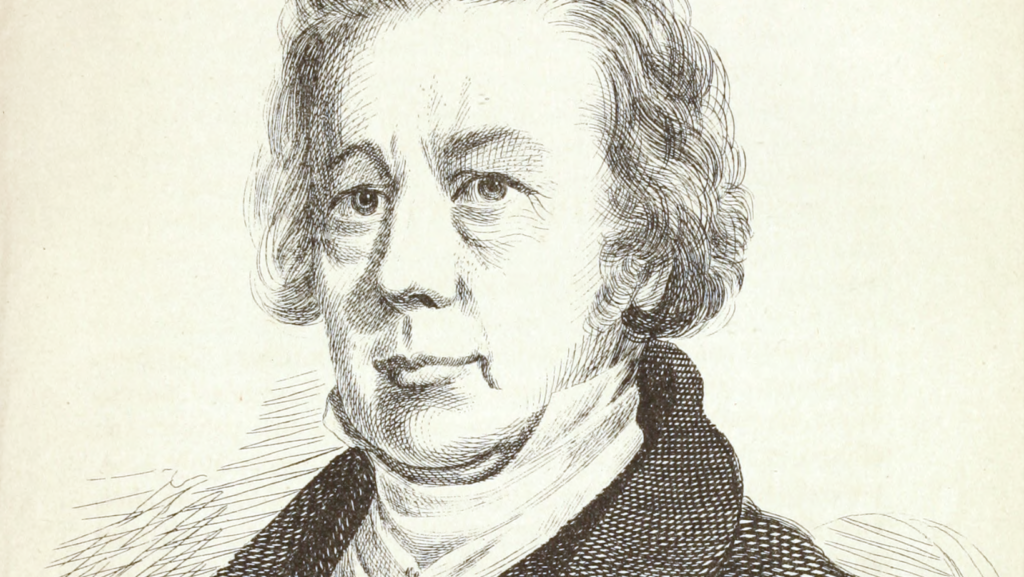
Difficulties immediately arise in seeking to call John Smyth the first modern Baptist. One is that he was not baptized by immersion nor did he give any defense of that mode. Another difficulty is that Smyth repudiated his own baptism and dissolved the church he established. Then, he sought to be united with the Mennonites in Amsterdam. A very good reason, however, may be stated for arguing that he is the fountainhead of the modern Baptist movement.
From his influence and teaching arose the first church to which the continuous history of the Baptists may be traced. This group of Baptists, the General Baptists, eventually merged into the Baptist Union of Great Britain and Ireland in 1891. Also, from their influence a number of Baptist churches freckled the southern colonies in North America and struggled toward a viable presence at the close of the twentieth century. Though the Particular Baptists had an independent origin and presented a more formidable presence in both England and America, the distinctive beliefs of believers baptism, liberty of conscience, and separation of church and state first made their unwelcome intrusion into the intellectual history of England through these unpromising dissenters.
Early Life and Education
No certain information is known of Smyth prior to his matriculation at Christ’s College, Cambridge, in 1586. That he came from a poor and relatively uninfluential family is certain from his position as sizar, that is, a student who gains access to education through working as a servant to other students. His mean background did not hinder his zeal in learning, however, and Smyth soon achieved recognition for his tenacity in scholarship.
After graduating bachelor of arts in 1590, Smyth stayed and served as fellow. During these years he would be aware of the ideas of Francis Johnson in his advocacy of Puritan Presbyterianism, his adoption of separatism, and his assignment to the Clink prison for joining a separatist congregation in London. He would learn that the proto-separatist, Robert Browne, had given up his ideals and had received an appointment in the established church.
Just as prophetic for Smyth’s development was an internal challenge to the orthodox Calvinism of the university. William Perkins, a seminal thinker within the emerging Puritanism, lectured on the Apostles’ Creed, resulting in the publication in 1595 of his Exposition of the Creed. A student named Barrett took exception to its content in a public exercise for the degree of B.D. and eventually was brought to make a public recantation of his remarks. A Trinity professor, Baro, supported the student and eventually criticised the Lambeth articles written by Archbishop Whitigift. The Lambeth articles gave a strongly Calvinistic interpretation to the article on election in the Thirty-nine Articles. These events apparently did not change Smyth’s Calvinistic theology at the time; they possibly served as a seed-bed for future changes.
Graduation and Early Ministry
By 1598 Smyth had finished his formal education, probably with M. A., had married (Mary was her name), and was seeking a livelihood. According to W. T. Whitley, “we may imagine Smyth supporting himself and bride, either by tutoring at Cambridge, or as chaplain, or curate, or more probably as master of a school.”[1]
In 1600, Smyth was elected to a coveted and relatively lucrative position of lecturer in the city of Lincoln. He functioned there as a Puritan, strongly Reformed in theology, and not opposed to some magisterial role in the protection and establishment of pure religion.
His discussions on the nature and completeness of Christ’s sufferings in his exposition of Christ’s prayer, “Let this cup pass from me,” expresses a fullness of theological and exegetical understanding favorably comparable to the best of Puritan preaching. As Smyth explains, Christ already was tasting the cup of God’s wrath and prayed under the cloud of the mystery of its continuance and severity. He prayed that he might not so remain under that cup as to render him unable to be a mediator and thus incapable of saving his people. This constituted a “reverent fear” and submission to the Father’s wisdom and was fully answered in the resurrection and ascension. This same note would be emphasized in the sermon A Paterne of True Prayer. His explanation of why we must pray only in the name of the Son points out that only the Son has taken our nature, suffered in our stead, and merited for us an audience with the Father. “Seeing then of all the three persons in Trinitie the Sonne onely is our intercessor, therefore in the name of Christ alone wee must pray.”[2] The person that is to be our intercessor, Smyth continues “must also be our sacrifice of propitiation: and contrarily our propitiator is our intercessor.” Our assurance of the effectuality of his intercession, and, therefore, of the certainty of forgiveness depends completely on Christ’s person and work as having perfectly fulfilled the law, sustaining such punishment as to make satisfaction for our sins.
Smyth also unveiled a rather salty spirit and vocabulary toward Roman Catholicism. Some of their views he called “blasphemous” and others, “foolish.” Their distinctions in the vocabulary of worship that allowed them to pray to the Saints and the Virgin he called “threadbare and motheaten.”[3] His forceful language showed his sincere opposition to the dangers inherent in that system.
He preached an exposition of Psalm 22 in four sermons in Lincoln that was printed in 1603 as The Bright Morning Starre. His closing words express a doctrinal urgency deceivingly unprophetic of the theological changes he eventually sustained. Smyth made the issue of imputed righteousness central to the stewardship of the church. The church of the Gentiles had “one principall office” according to Smyth. Since they had “come home into the bosome of Christ, by effectual vocation and true faith” they were to declare “the righteousnes of Christ God-man;” that is, the “righteousnesse which he hath wrought for us, in suffering and obeying the lawe.” Turks and papists deny “imputative righteousnesse, and mocke at a crucified Christ.” It is highly important, therefore, “that we faile not in defence of Gods righteousnesse.” It is a special duty “to teach our children and posterity especially the article of justification by faith onely.” Should we fail in this, the “subtill and crafty Jesuites” who labor “to perswade the meritt of good workes and so to shoulder the Lord Jesus Christ his righteousnes out of dores” might “wrest it from us.”[4]
Smyth’s use of the doctrine of election and limited atonement as missionary imperative also contrast starkly with his final doctrinal stance. He was sure by virtue of the covenant we [Gentiles] “shall be a meanes to bring them [Jews] unto the fellowship of the gospell.” He urged that Christians labor by all possible means to bring home those not yet born by spiritual regeneration and as yet unbaptized. Turks and Jews and all nations “where we traffique” must be brought to the knowledge and love of the truth. It is certain that they may “partake in this righteousnesse which Christ hath wrought for as many of them as appertaine to his election.”[5]
Smyth also assumed an establishmentarian position in advocating magisterial responsibility “by law [to] establish the worship of God according to the word”[6] This concept also would be rejected as erroneous when Smyth reframed his doctrine of the church.
Smyth’s position as lecturer proved to be the pawn of political rivalries in the city, and Smyth found himself without a position at the end of 1602. He was accused of having been too personal in his preaching–a charge he denied.
The Logic of Separatism
Smyth’s activities, except for the publishing of the two sermons quoted above, are undocumented until 1606. In those eventful years, however, James I from Scotland became king and the Puritans failed to make any substantial progress in reform as they presented to him the “Millenary Petition” and met with him at Hampton Court. The Puritans asked for changes in the church service, the organization of the ministry, church livings and maintenance, and church discipline. Slight explanations were allowed for tender consciences, but few concessions were made and conformity was urged in clear terms.
This lack of progress in purifying the church prompted Smyth into a series of discussions with friends on the nature of the church. By 1607 he had reached a clearly separatist position and confirmed it in a book, Principles and Inferences concerning the Visible Church. Separatists concluded that the Church of England was irreformable. It had a false worship, a false ministry, and a false constitution. True believers had no alternative but to separate from it.
Among several interesting ideas in Principles is Smyth’s assertion that the true matter of a visible church are “Saints,” that is, those who are “separated from all knowne syn, practising the whol will of God knowne unto them, growing in grace and knowledg continuing to the end.” Appropriate Scripture proofs accompanied each part of the definition. In addition, the manner of forming the church Smyth held to be by covenant. This covenant consisted of two parts: that between God and the saints and that between the saints mutually. He had led a group in forming a church through covenant just recently, an event recorded by William Bradford.
They shooke of this yoake of antichristian bondage, and as ye Lords free people, joyned them selves (by covenant of the Lord) into a church estate, in ye fellowship of ye gospell, to walke in all his wayes, made known, or to be made known unto them, according to their best endeavors, whatsoever it should cost them, the Lord assisting them.
On to Amsterdam
It soon cost them their country. The time of winking at non-conformists was over, and action against separatism increased. Smyth, therefore led his congregation to Amsterdam where his former Cambridge tutor, Francis Johnson, had led an older separatist congregation some years before (1592).
Instead of joining them as he planned, Smyth found too many differences in perspective and appended a supplement to his recent publication on the church. This one was entitled The Differences of the Churches of the Seperation [sic] (1608). Smyth noted that differences in concept of worship, “Concerning the Leitourgie of the Church,” and of officers, “Concerning the Ministerie of the Church,” created differences severe enough to keep the two bodies separate.
An intriguing element of this argument concerns Smyth’s view of the use of books in worship. Changing from his former defense of using books and even set forms of prayer, Smyth now argued that books should not be used for singing or for preaching. This included the use of Scripture, not because he denigrated Scripture. The originals that are inspired and without error cannot be read in worship for it would be an unknown tongue to the congregation. A translation cannot fully express all that is in the original in nuance and thus must be rejected for pure spiritual worship as a work of human composure. While we should read and study Scripture both in the original languages and in translation for personal edification and may read Scripture publicly for corporate edification, it cannot be proved, according to Smyth, that a book was ever made use of for prophesying in true Spiritual Worship.
A Change in Baptism
Smyth was not through changing. By 1609 he concluded that the church should dissolve and reconstitute on the basis of believers baptism. His arguments for this he put in a book entitled The Character of the Beast. His argument proceeded from two leading ideas. The first, “That infants are not to be baptized,” he defended with three arguments. One, there is neither precept nor example in the New Testament of any infants that were baptized; baptism was placed only on those who confessed their sins. Two, Christ commands to make disciples by teaching, then to baptize them; but infants cannot by doctrine become Christ’s disciples. Three, “If infants be baptized, the carnal seed is baptized; and so the seal of the covenant is administered to them unto whom the covenant aperteyneth not.”[7] He called infant baptism “the most unreasonable heresy of al Antichristianisme” and said that “it is folly & nothing.”[8]
Smyth shows in this third point that his view of believers baptism did not draw him entirely away from covenant theology. His understanding of the relationship between the old covenant and new covenant changed and may be summarized in this statement:
As in the Old Testament carnal infants were carnally begotten & borne by the mortal seed of generation by their carnal parents, & then were carnally circumcised, & receaved into the carnal covenant. So in the new Testament Spiritual infants new borne babes in Christ, must be Spiritually begotten & borne by the immortal seed of regeneration, by the Spiritual parents, & then being Spiritually circumcised they shal by baptisme with water be receaved into the New Testament.”[9]
His second thesis reflects the vocabulary emerging from the ecclesiological tensions of the day: “That Antichristians converted are to bee admitted into the true Church by Baptisme.” That is, a person baptized in infancy (an antichristian), when converted should be truly baptized before admission into the church. “That baptisme of theirs,” says Smyth, “was never apointed by God: but it is the devise of Antichrist.”[10] Again he offers three discreet discussions in defense of the point. One, churches are to be constituted as they had been constituted by the apostles. We have no record of the apostles creating churches by any other way than baptism of believers. Two, if believers baptism is true baptism, then infant baptism is not. True Baptism is but one and all members of Christ must have true baptism. It is clear from Scripture that the baptism of those who have become disciples by believing the doctrine of Christ is true baptism. The other, therefore, is not. Three, because as the false church is rejected and the true erected and false ministry is rejected and true ministry erected, so false baptism must be renounced and true assumed.
When Smyth constituted this church, he still considered the Mennonites doctrinally suspect and thus incapable of administering true baptism. A former friend but antagonist in this change, Richard Bernard, revealed, “He could find no whither to goe for Baptisme; in some Churches it was false, as he imagined; in some true, but not lawfully to be received because of some heresies.”[11] A footnote indicates that he meant Anabaptists by this latter characterization. Even in the preface to Character of the Beast, Smyth had pointed out specific doctrinal cautions concerning Mennonite theology. Though he had come to their view of baptism, other errors interrupted the possibility of a proper confession of faith. Severe pressure from accusations evoked a disclaimer: “For we disclayme the errors commonly, but most slaunderously imputed unto us: we are indeed traduced by the world as Atheists by denying the old Testament & the Lords day: as Trayters to Magistrates in denying Magistracy: & as Heretiques in denying the humanity of Christ.” These unflattering rumors guided Smyth in clarifying his position regarding the Old Testament in which he showed greater affinity for the Mennonite understanding of discontinuity between the covenants but wanted to remove himself from the caricatures of that position. He affirmed both the Sabbath and the necessity of magistrates.
He was particularly insistent in distancing himself from the Mennonite history of arguing for celestial flesh, a concept of Christ’s incarnation which appeared to be docetic. Christ is the “seed of Abrah. Isaac, & Jacob, & of David” and also is the “Sonne of Mary his Mother, Made of her substance.” Because other children have “ther bodyly substance from their parents” so must Christ. Smyth identified his position clearly with historic orthodoxy in confessing that “Chr. is one person in two distinct natures, the Godhead & manhood, & we detest the contrary errors.”[12]
Unable to find a true church to administer true baptism, Smyth baptized himself, then his good friend and follower Thomas Helwys. He defended this action in the face of Separatist criticism. The Separatists made themselves a church, when they were no church, by covenanting together. Smyth and Helwys made themselves a church, when they were no church, by taking the ordinance of baptism on themselves.[13]
When Smyth was accused of inconstancy because of so many and such rapid changes, he answered that though inconstancy in general is not admirable and is worthy of reproof, a change from the false to the true is good. For a man to change from a Turk to a Jew, from a Jew to a Papist, from Papist to Protestant are all commendable changes though it be done in the space of a month. Also the change from Puritanism to Brownism, and from Brownism to “true Christian baptisme, is not simply evil or reprovable in it self, except it be proved that we have fallen from true Religion.”[14]
As the controversy continued, however, one antagonist offered an objection that Smyth could not overcome. John Hetherington, in conference with some of Smyth’s followers, suggested that they had violated their own principles in accepting a self-baptism as legitimate. If infant baptism is rejected because there is neither example nor command for it, where does command or example exist for a person’s baptizing himself? He also accused Smyth of spiritual pride, posturing himself as “holyer then all.”[15]
More Changes
Though he had rejected the legitimacy of Mennonite Baptism previously, Hetherington’s observation that Smyth had neither precept nor example for a self-baptism plus his accusation of disorder and spiritual pride made him reconsider. This renewed visit to Mennonite theology led to a theological shift in Smyth and resulted in his desire to seek admission to their church. He presented a twenty article Latin confession for the examination of the Mennonites. Not only is it antipaedobaptist, the doctrine now clearly takes the anti-Augustinian viewpoint of the Mennonites on predestination, original sin, and the will, as well as the anti-Lutheran view of justification by faith. Its wording on Christology is careful neither to offend the Mennonite history nor clearly to affirm celestial flesh.
This confession was followed by a full theological interchange between the Mennonites and the church of Smyth. His final theological position was stated in Propositions and Conclusions concerning True Christian Religion. The extent and intensity of Smyth’s theological shift, given the clarity of previous Calvinistic Puritanism, is quite startling. Original sin is an idle term and infants are conceived and born in innocency. Election, instead of being personal and unconditional, is God’s having chosen to establish the way of salvation through faith in Christ. Christ’s atonement is for all without exception and removes our enmity against God–not God’s against us–for he never hated nor was ever our enemy. The whole system of imputation so central to Smyth’s earlier preaching was now defunct. Justification consists of regeneration and renewal. A Christian cannot possibly perform the duties of a magistrate. Smyth still maintained his high view of Scripture but argues a strange assertion that “the new creature although he be above the law and scriptures, yet he can doe nothing against the law or scriptures.” He also continued to maintain that “outward baptisme of water, is to be administred onely uppon” penitent and faithful persons and not infants or wicked persons.
Smyth changed not only his theology but began to express lament over past attitudes. He had been too harsh, too judgmental, too censorious, too punctilious on external matters, and too quick to rule people out of Christ and into antichrist. He chose to retract much of his writing not because it was wholly false “but for that it is wholy censorious and criticall.”
Though his writings indicated strong confidence in his positions, he had always been willing to change when convinced by superior arguments. Now he refused to enter into controversy with his critics. Some said he was unable to answer their arguments. He had become convinced in conscience, however, that he should not strive about external matters and breed controversy among brethren. “I had rather be accounted unable to answere” Smyth wrote, “then to be found in synne against my conscience.”[16] Though some might find glory in being “peremptorie and immutable” in their doctrine, they may enjoy that glory without the envy of Smyth though not without the grief of his heart for them. Smyth based his salvation on a faith that did not include any articles concerning the external nature of the church. In this confession he claimed to “differ from no Good Christian.”
That Jesus Christ the Sonne of God, and the Sonne of Marie, is the Anointed king, Priest, and Prophett of the church, the onlie mediator of the new Testament, and that through true repentance and faith in him who alone is our saviour, wee receive remission of sinnes, and the holie ghost in this lyfe, and there-with all the redemption of our bodies: and whosoever walketh accordinge to this rule, I must needs acknowledge him my brother: yea, although he differ from me in divers other particulars.[17]
His friend Thomas Helwys, who broke with him when he began overtures to join the Mennonites, had issued several censures of Smyth concerning succession in the institution of baptism and Smyth’s views on the flesh of Christ. Smyth responded with carefully worded explanations. In accusing Smyth of sinning against the Holy Spirit by rejecting the truth, specifically the legitimacy of his self-baptism, Helwys, in Smyth’s words, “erreth not a little, and breaketh the bonde of charitie above all men that I ever read or heard in uttering so sharp a Censure uppon so weake a ground.”
On the flesh of Christ, Smyth personally believed that Christ obtained his flesh from his mother Mary. Yet the issue was not so important as an article of faith “that if anie man will not consent unto it I should therfore refuse brotherhood with him.” Even better, according to Smyth, than a correctly worded knowledge of Christ’s natural flesh is a conformity to his spiritual flesh. The purpose of the incarnation after all was that sinners might be remade in the likeness of Christ’s death, burial, and resurrection in mortification of sin and the new birth. They are to be made “flesh of his flesh, and bone of his bone, spiritually in the fellowship of one holy anointing.”
One who moved so rapidly from one doctrinal rubric to another necessarily carries baggage with him and runs the strong possibility of picking up contradictions along the way. So it was with Smyth. As mentioned above, he introduced ambivalence between the final authority of Scripture in all things and the present working of the Spirit in the life of the “new Creature.” The doctrine of original sin became muddled also. He attempted to reject it entirely in strong forthright language of his Short Confession: “That there is no original sin, but all sin is actual and voluntary, viz., a word, a deed. or a design against the law of God; and therefore infants are without sin.”[18] In Propositions and Conclusions, however, the reader will find that original sin has not been so neatly excised from Smyth’s thinking and feeling. “When we have done all that we can” Smyth admits, we find that we only can “suppress and lop off the branches of sin, but the root of sin we cannot pluck up out of our hearts.” Original sin has hung around the theological premises and appears as “root of sin.”
His shift on justification involved the same imprecision and residual uneasiness. The Short Confession makes justification consist partly of Christ’s righteousness imputed and “partly of inherent righteousness, in the holy themselves.” This assertion makes all the more sobering the idea retained in the Propositions and Conclusions that “when we have done all we can we are unprofitable servants, and all our righteousness is as a stained cloth.”[19] By combining these two confessions we must conclude that God accepts our unrighteousness, our stained cloths, as constituting sufficient righteousness to complement Christ’s righteousness.
Before he could be received into membership of the Mennonite church, Smyth died in late August 1612 and was buried in the Niewe Kerke on September 1. His followers continued their overtures for union with the Dutch, and eventually were received in January, 1615. When the church listed its teachers, John Smyth headed the list of those that were “English.”
Conclusion
The complexity of Smyth defies any neat arrangement of his contributions to a single denomination. He must be evaluated on his own terms and in light of the provocation he provided for the creative energies of others. He was a hurricane that spawned tornadoes over the land though his own energy was spent over the ocean before landfall. Smyth’s defense of believers baptism found many sympathizers and established a credible defense for a practice that many considered a divisive innovation. His view of the church led naturally into an affirmation of liberty of conscience and separation of church and state. This idea also found many advocates and gradually cut its way through the forest of persecution into the future of western civilization.
Finally, precisely at the points in which he departed from historic Calvinism, Smyth opened the door to the descending stairway of theological decline. The tendency of Arminianism to liberalism does not in each instance become incarnate, but the frequency of such decline in Baptist history is enough to serve as a warning. Under the influence of the Mennonites, Smyth embraced an anti-Augustinianism in his view of sin, depravity, election, and justification that many future evangelicals would find more compatible with their view of a kinder, gentler God.
[1] W. T. Whitley. The Works of John Smyth, 2 vols.(Cambridge: University Press, 1915), 1: xxxviii.
[2] Smyth, Works, 1:116
[3] Smyth, Works, 1:120.
[4] Smyth, “The Bright Morning Starre,” Works, 1:65, 66.
[5] Smyth, Works 1:65.
[6] Smyth, Works, 1: 159.
[7] Smyth, Works, 2: 574.
[8] Smyth, Works, 2:567.
[9] Smyth, Works,2:582-583.
[10] Smyth, Works,2:468.
[11] Richard Bernard, Plaine Evidences: The Church of England is Apostolicall, the Seperation Schismaticall (London: T. Snodham), p. 17.
[12] Smyth, Works, 2:572.
[13] Smyth, Works, 2:660.
[14] Smyth, Works, 2:564.
[15] John Hetherington, A Description of the Church of Christ (London: Nathaniel Fosbrooke, 1610), 23.
[16] Smyth, Works, 2:756.
[17] Smyth, Works, 2:753.
[18] William L. Lumpkin, Baptist Confessions of Faith (Valley Forge: Judson Press, 1959), 100.
[19] Lumpkin, 136.